
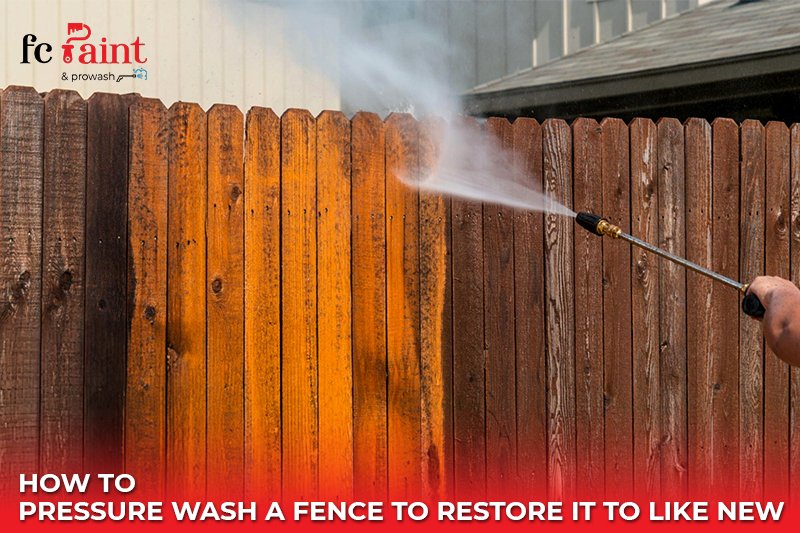
A faded, green-streaked fence ruins the look of any backyard. But with one solid cleaning session, you can fix that. Learning how to pressure wash a fence the right way saves money, prevents damage, and makes your yard shine again. This guide teaches you every step to clean it safely and prep for sealing.
Complete Step-by-Step Guide to Pressure Washing Your Fence
Step 1: Get the Fence Ready to Wash
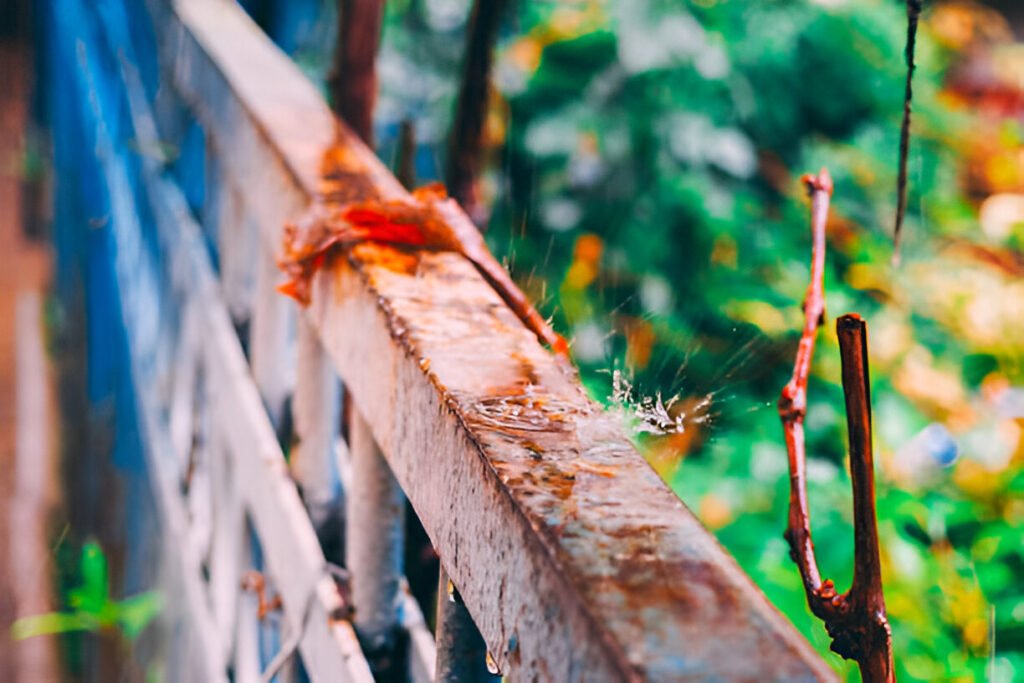
Start by walking the full fence line. Tap down loose nails. Tighten any screws. Remove leaves, spider webs, and tools hanging off the boards. Then move flower pots, chairs, or anything nearby. Cover plants with plastic if you’re using detergent.
Wear goggles and gloves as well as boots. Never point the wand at people or pets. Turn off nearby electrical outlets if water may reach them.
RELATIVE: Step-by-Step Guide to Restoring Your Wooden Fence
Step 2: Pick the Right Pressure Washer and Nozzle
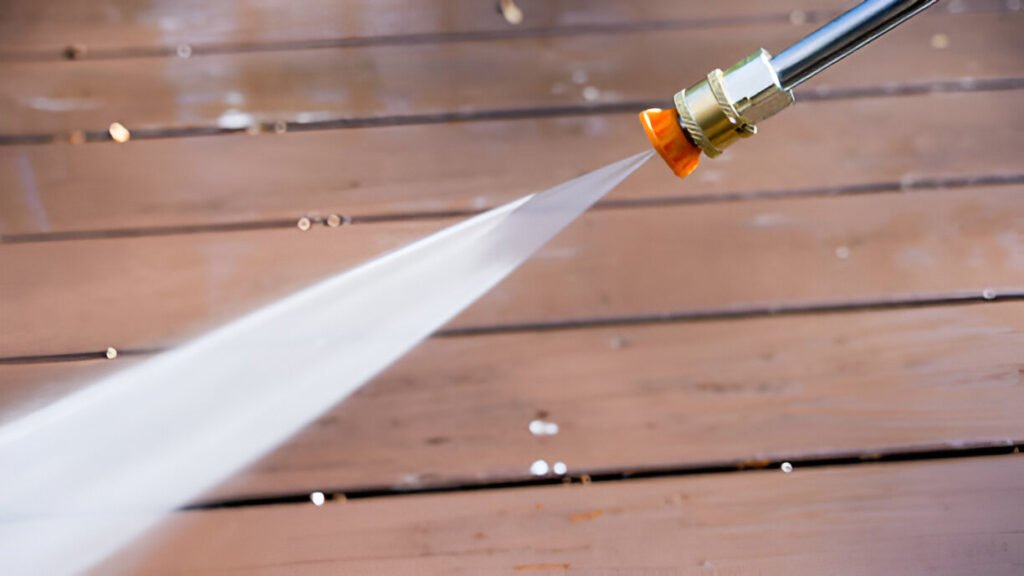
For wood, stick to 500–1200 PSI. Higher pressure can cut into soft boards. For vinyl or metal fences, 1300–1900 PSI works fine. Choose a 25-degree or 40-degree nozzle. These spread water safely over wide areas. Avoid the red 0-degree tip. It’s too strong and causes wood damage fast.
Step 3: Use a Cleaning Solution If Needed
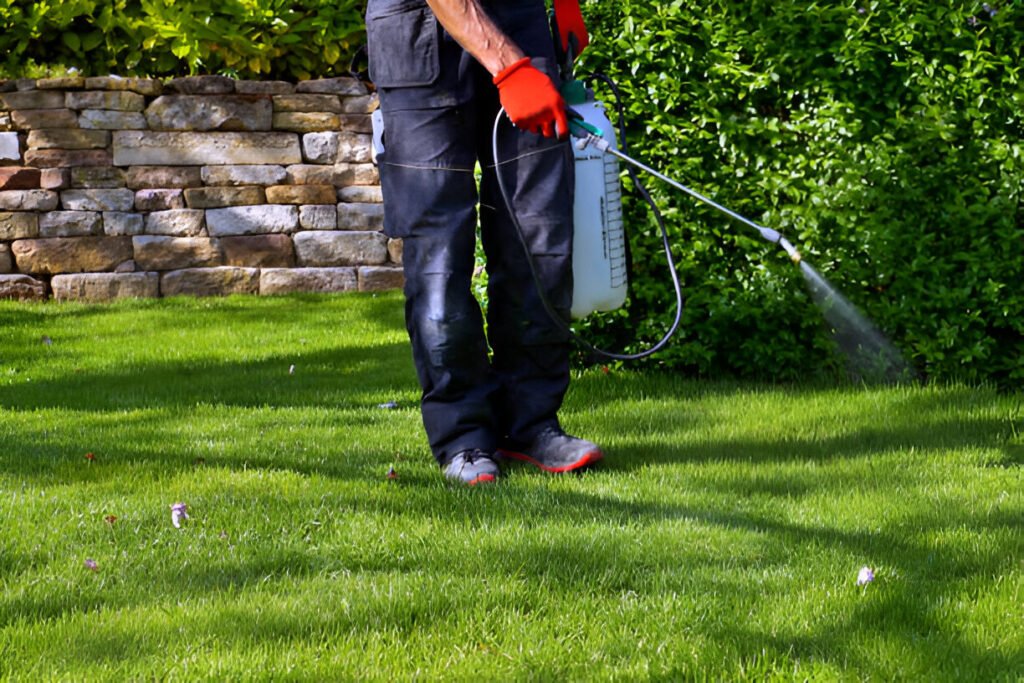
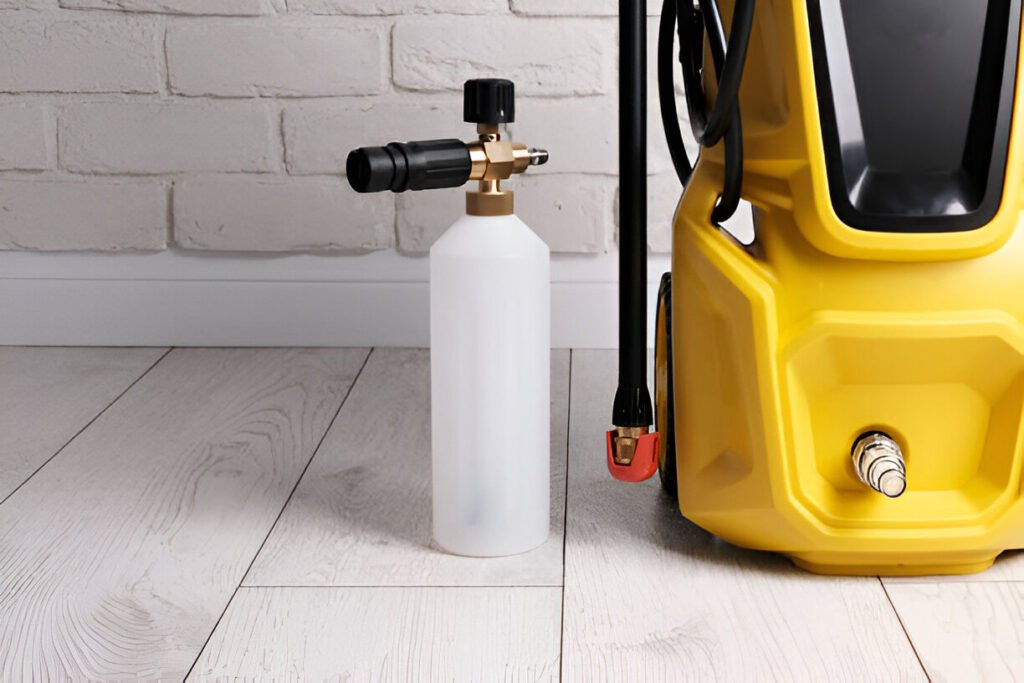
For mold, algae, or gray wood, a cleaner helps. Mix a wood-safe detergent in your washer’s tank or use a garden sprayer. Spray from the bottom up. Let it sit 5–10 minutes to loosen dirt. Avoid letting it dry. On hot days, work in smaller sections.
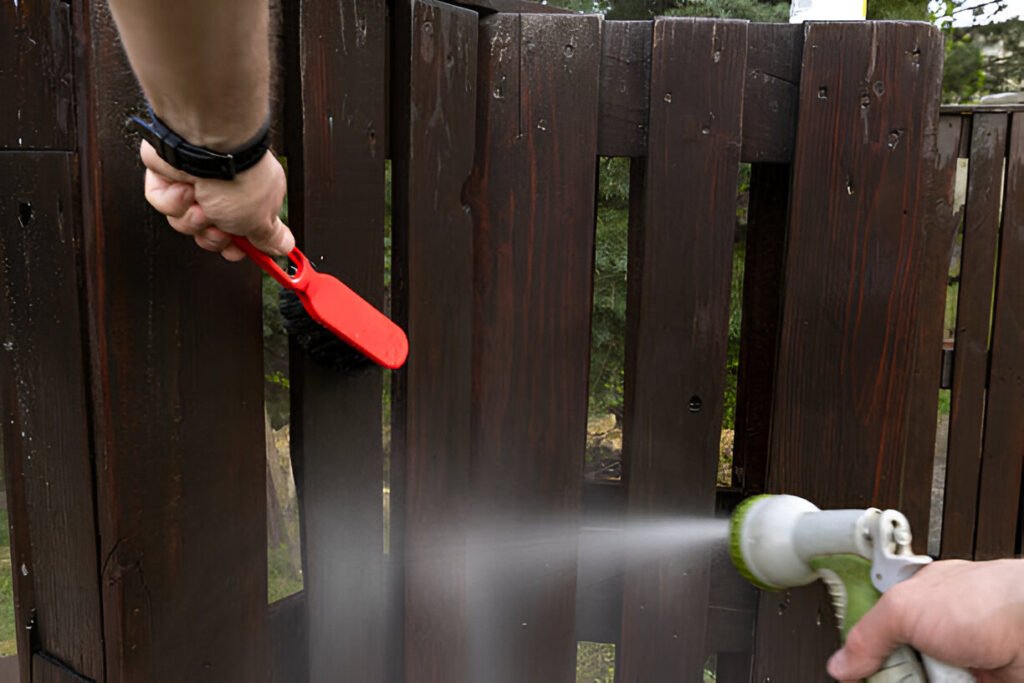
Step 4: Start Pressure Washing the Fence
Stand 18–24 inches from the surface. Keep the spray tip at a 45-degree angle. Move in slow, steady strokes. Always follow the grain of the wood.
Overlap each pass by 50%. This avoids streaks and missed strips. Keep your arm moving. Stopping in one spot may gouge the surface.
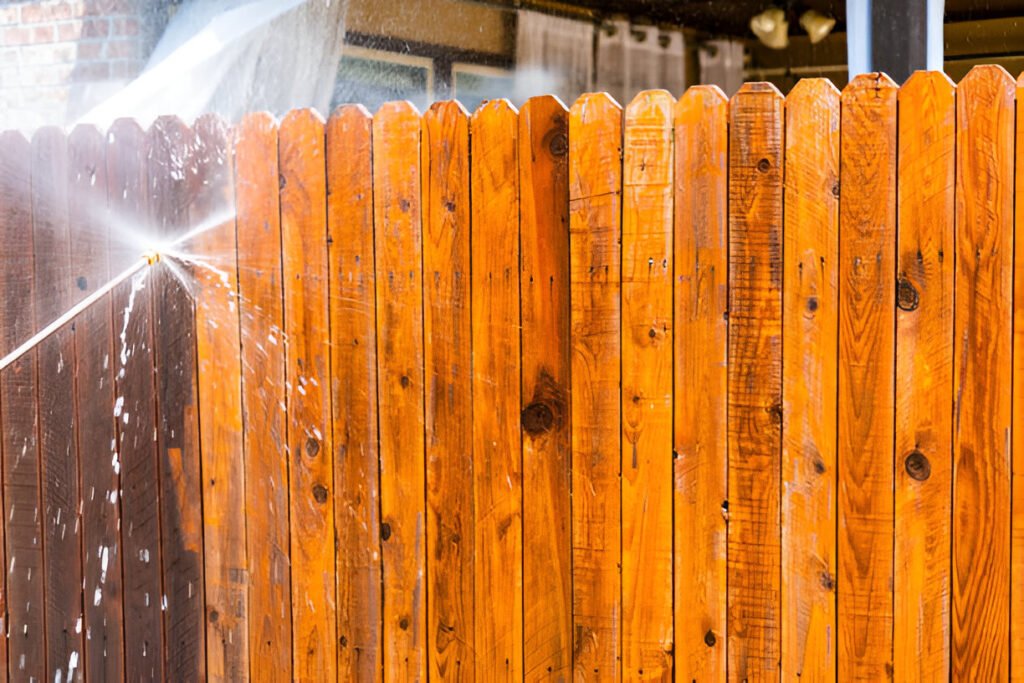
Step 5: Rinse and Let the Fence Dry
Switch to plain water. Use a wider nozzle if needed. Rinse off all soap and debris from top to bottom. Let the fence dry for at least 24–48 hours. Sun and breeze speed it up. If you plan to stain, don’t rush. Wet wood won’t absorb stain evenly.
How to Pressure Wash Your Fence and Restore It to New
When to Stain or Seal After Cleaning
After cleaning, wood becomes thirsty. That’s a perfect time to protect it. Wait until it’s fully dry, then apply stain or sealer. Oil-based stains work best for older fences. Water-based products suit newer builds.
Use a sprayer, brush, or roller. Follow the wood grain. Don’t apply too thick. Always check the weather. It rains ruin fresh coatings. Applying stain after a power wash fence before the staining session extends your fence’s life and helps prevent rot.
Fence Cleaning Tips to Keep It Looking Good
- Rinse your fence every few months with a hose.
- Trim grass and plants near the bottom rails.
- Don’t aim lawn sprinklers at the boards.
- Re-stain every 2–3 years, depending on the weather.
These simple steps reduce buildup and slow mildew growth.
What to Avoid During Fence Cleaning
- Never use bleach on wood. It dries and cracks the surface.
- Don’t wash in freezing temps. Ice may form and damage wood.
- Don’t forget to test PSI on a small area first.
Pro Fence Cleaning Techniques Most Homeowners Skip
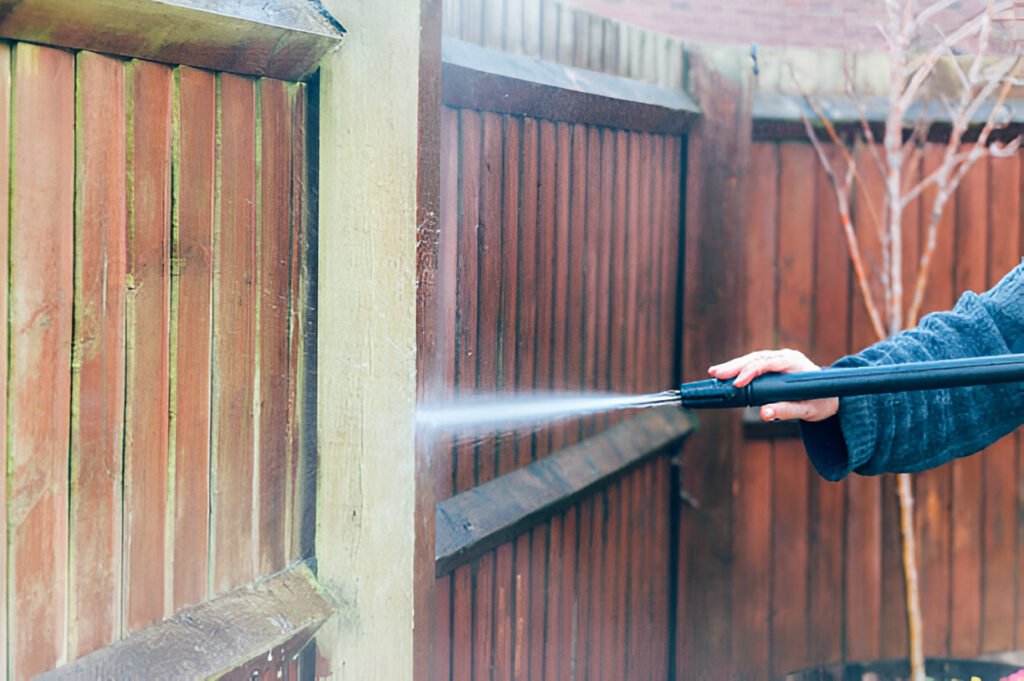
Even seasoned DIYers miss these expert tricks:
- Always test detergent and PSI in a corner.
- Sweep before washing to clear fine dirt.
- Use a long extension wand for tall fences.
- Spray from the inside out to avoid yard mess.
- Protect your hands with rubber gloves if using cleaners.
If your fence looks uneven after drying, use a light sanding block to smooth it out before sealing.
When to Call a Pro Instead of Doing It Yourself
Hire a pro if:
- You have no washer or time to rent one
- Mold is deep in the grain
- Your fence wraps a large property
- You want perfect prep before sealing
Professionals clean evenly and quickly using the right tools. If you’re in New York, Texas, or California, pros often include soft washing for fences with delicate finishes.
Final Words
Pressure washing restores your fence’s original color, removes grime, and gets it ready for a long life ahead. All it takes is the right gear, smart technique, and patience. Follow these fence cleaning techniques and you’ll avoid mistakes. Whether you clean it yourself or call a pro, your fence will look sharp for seasons to come. You can check FC Paint ProWash expert services for affordable help. We handle wood, vinyl, and metal fences with care.
FAQs
Yes. Too much pressure or using the wrong tip can gouge the surface.
Once a year for wood. Every 2 years for vinyl unless it’s near trees.
Yes. Cleaning removes dirt and opens pores for better stain absorption.
Stick with 500–1200 PSI for wood. Test to avoid splintering.
Yes. It’s faster, deeper, and uses less water for better results.