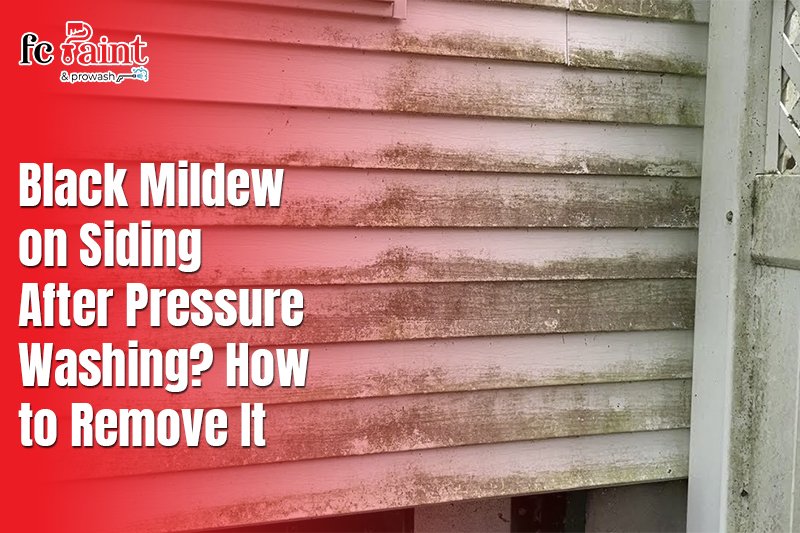
You just pressure-washed your siding, expecting a spotless look free of stains. Instead, stubborn black spots remain. That is mildew, and high pressure may have forced water behind siding panels. The mistake often worsens problems instead of solving them quickly.
Those black mildew stains grow fast in damp conditions. If left alone, they spread widely across siding panels. It also reduces curb appeal quickly. Here you will learn how to remove mildew safely. You will also learn how to keep it from returning. So siding stays clean and lasts longer without repeated costly treatments.
Why Black Mildew Appears After Pressure Washing
Black mildew on siding after pressure wash happens when forceful sprays push water where it should not be. The strong stream can pass behind siding panels and create a damp breeding ground for spores. Instead of cleaning, this mistake often triggers faster regrowth. Once mildew takes hold, removing stains becomes more challenging with time.
Moisture and shade equals mildew growth. Surfaces that stay wet and do not receive sunlight become perfect zones for black stains. Once mildew spores land, they feed on organic particles and keep spreading until cleaned. Spores often thrive near shaded trees and damp corners. Areas with limited airflow also suffer from stubborn mildew growth.
Common siding types affected include vinyl siding and aluminum. Vinyl panels may trap water behind edges. Wood holds moisture deep in its fibers, and aluminum shows streaking quickly. Each type needs tailored cleaning methods to avoid making the problem worse. Choose the correct method to prevent lasting structural issues.
Even modern siding products with protective coats are not immune. Makers may claim mildew resistance, yet dirt buildup with moisture still creates growth conditions. Without regular cleaning, even treated panels will eventually show black patches and stains.
Soft Wash vs Pressure Wash for Siding
When comparing soft wash vs pressure wash siding, both methods aim to clean panels but use very different techniques. Pressure washing relies on a strong stream that may harm siding and force water into gaps. Soft washing uses gentle sprays with solutions that kill spores at the root.
This safer method guards siding and prevents trapped dampness that causes mildew growth. It keeps panels strong and extends their life with ease. The gentle cleaning solutions in soft washing clear stains and spores fully, giving results that last. Clean siding reflects light well and builds natural property value.
Risks of High-Pressure Washing
Using high force brings pressure washing siding damage that often goes unnoticed at first. Water intrusion is the most common problem. Siding panels are not designed to block intense water streams entering seams and gaps. Once inside the panels, dampness lingers and feeds mildew again. Mold hidden inside siding keeps spreading until costly repairs are needed.
Surface oxidation streaks are another risk. Older aluminum siding often has an oxidized layer. Blasting with high-pressure strips it unevenly and leaves visible streaks that reduce curb appeal. Repainting is often the only fix afterward. This added cost frustrates homeowners and reduces long-term siding durability.
Paint chipping and warping also happen when siding faces extreme force. Wooden panels may crack, and paint may peel. Vinyl siding can warp under heat combined with pressure. This kind of damage reduces property value significantly. Repairing siding after such harm often costs more than regular soft washing care.
High-pressure work may also void warranties for many siding products. Makers often give safe cleaning advice. Ignoring those rules by using extreme pressure can lead to warranty denial during repairs.
Step-by-Step Guide to Removing Black Mildew
Step 1: Safety and Prep
Start secure when you remove mildew from vinyl siding. Wear gloves and goggles as well as a mask. This gear shields you from spores and chemical spray. Keep yourself safe during cleaning and avoid health issues.
Plants and windows also need shielding before you start. Cover bushes with plastic sheets and close windows tightly. This prevents chemical drift from harming greenery or entering your home. Protecting your yard ensures cleaning solutions work only where needed.
Step 2: Use a Mildew Cleaning Solution
The best mildew cleaner for siding is often sodium hypochlorite. Mix with a surfactant and apply it perfectly. Always dilute to avoid harming siding surfaces. Strong solutions can stain vinyl and weaken coats of paint.
Store-bought mildew removers like Jomax and Jameson are also reliable. These products are made to treat siding without heavy scrubbing. They give both stain removal and spore kill in one step. Always follow the label steps closely for the best and secure results.
Homemade cleaners such as vinegar and water can help with smaller patches. Yet they are less effective for deep mildew colonies that sit inside pores. For larger areas, commercial-grade mixes remain the most dependable.
Step 3: Gentle Agitation
After the solution sits, use a soft brush for stains. This removes mildew gently without scraping or damaging siding. Pressure washing is not needed for this step. Brushing ensures stains fade completely and gives better control.
Abrasive pads should always be avoided. They damage siding surfaces and may leave visible marks that catch light. Gentle tools give strong results without creating new flaws. Using proper brushes preserves siding quality while still removing stubborn spots fully.
Step 4: Low-Pressure Rinse
Finally, rinse with a low-pressure nozzle from top downward. This allows dirty water to flow off the siding easily. A slow rinse spreads water evenly for consistent results. Always repeat until surfaces appear clean with no residue.
Never aim water upward under siding seams. Doing so risks forcing moisture back inside panels that should stay dry. A downward rinse keeps surfaces clean and protected. Repeat the rinse to ensure no cleaner residue remains on the panels. The same technique can be applied when learning how to pressure wash a fence, ensuring even cleaning without damage to the wood or panels.
Preventing Future Mildew Growth
Effective siding mold removal tips go beyond cleaning. Prevention ensures black mildew does not appear again so quickly. Start by trimming nearby trees to open sun paths along walls. Added sunlight lowers surface moisture that feeds spores and helps panels dry faster.
Maintaining gutters is another key step. Clogged gutters push water onto siding and keep walls damp for many days. Clean gutters often to stop dampness that feeds mildew and lowers siding strength. Good gutter care also protects the home’s base from water that pools near the soil.
Annual soft washing gives long-term siding protection. Plan a gentle clean once each year so mildew spores are removed before they show. This lowers care stress and spreads the cost across seasons. A yearly plan is a smart move for looks and property value.
Choosing mildew-resistant paint is also wise. These paints build a thin shield that blocks mildew from getting a firm hold. For a deeper guide on long-term prevention, check this resource on preventing mildew from returning. Coats that guard panels are cost-wise when compared to repeated deep cleans.
Another smart step is to control moisture near your house. Turn downspouts away from siding and reduce standing water across beds. Check sprinklers for overspray during normal use and adjust as needed. These simple habits greatly reduce conditions that favor mildew growth.
When to Call a Professional
Sometimes DIY is not enough. Large infestations across many walls demand expert tools and skill. Pros use stronger cleaning mixes and controlled sprays for full removal. Their knowledge prevents errors that many people make on big mold jobs.
Delicate or historic siding materials need expert care and steady hands. Old wood, stone, or antique finishes cannot handle even low-pressure rinsing. Calling specialists avoids costly replacement later. Skilled crews apply safe solutions that preserve charm and panel form.
Commercial-grade cleaners may also be needed for stubborn or wide stains. Pros have access to solutions that outperform most store products by a wide margin. Hiring help saves time and ensures safety. It also keeps the skin intact and free from avoidable harm.
Pro service also brings peace of mind during and after the job. Instead of worrying about mixing or rinsing, you know siding will be treated with care. This comfort is valuable for owners with limited time or no experience.
House Washing & Pressure Washing
Homeowners benefit from house washing and pressure washing. Because soft washing keeps siding secure, it also boosts curb appeal and gives great value. Extra services like gutter cleaning and fence cleaning add value by providing a complete property refresh during one professional visit.