
Hardscapes build the base of outdoor areas and brings shape to the space. They include patios, pavers, retaining walls, stone paths, and driveways. Each one adds beauty and purpose while making your yard easy to use. But even the toughest stone or brick needs steady care to stay strong. Without it, time, weather, and weeds can wear everything down. Proper hardscape maintenance keeps your surfaces looking fresh and solid for years. Dirt, water, and heat slowly change how they look and feel. Cleaning, sealing, and checking for cracks takes little time but makes a big difference.
Best outdoor flooring care starts with consistency and attention. When maintained properly, your hardscape stays smooth, safe, and ready for every season. Many homeowners assume these surfaces last forever, but that’s not the case. Rain can wash away sand, sunlight can fade color, and roots may shift stones over time. With small, regular efforts, you can stop these issues before they grow. This guide shares simple, practical ways to keep your outdoor flooring clean and strong. You’ll discover the best tools and habits for lasting results. By keeping up with routine maintenance, you protect your investment, save money, and keep your outdoor spaces looking sharp. A little care today means your patio and walkways will last for years to come.
Common Hardscape Surfaces & Their Challenges
Different Materials Need Different Care
Outdoor spaces often mix many materials, and each one reacts differently to the elements. Learning how to clean and care for every type helps your yard last longer. Here’s what to know about cleaning hardscape surfaces based on the material you have.
Concrete Pavers
Concrete pavers look solid, but can stain and crack over time. Oil spots and efflorescence are common problems. Efflorescence shows as white powder that forms when water brings minerals to the surface. Regular sweeping and washing prevent buildup. Use mild soap and a soft brush for cleaning hardscape surfaces like these. Sealing every few years stops water from getting in and causing cracks.
Natural Stone
Stone patios or walkways are strong but still need care. Moss and mold grow fast in damp, shaded areas. Use pH-balanced soap or stone cleaner to wash them. Avoid harsh chemicals that dull the finish or change the color. Seal the surface yearly to block stains and keep the natural shine.
Brick
Brick adds warmth but fades with time under sunlight. The mortar or joint sand between bricks wears down from rain. Sweep often and rinse with gentle water pressure. For cleaning hardscape surfaces made of brick, avoid acid-based cleaners. Replace missing sand or mortar to prevent shifting and keep the floor even.
Gravel & Decomposed Granite
Loose materials like gravel or granite move easily and attract weeds. Rake the surface to level it and pull out weeds before they spread. Adding a weed barrier under the base helps, too. Light rinsing removes dust and keeps the color bright. A little effort keeps these paths tidy and easy to walk on. Each surface has its own care rhythm. When you understand those needs, your hardscape stays clean, stable, and beautiful for years.
Essential Tools & Supplies
What You’ll Need for Easy Maintenance
Keeping your hardscape clean and strong starts with the right tools. You don’t need fancy equipment, just a few basic items that help you work smarter. These hardscape maintenance tips begin with preparation and safety. A pressure washer or garden hose removes dirt, leaves, and grime. Use a stiff broom to sweep away dust and debris from cracks.
When rinsing, keep the water pressure low on delicate surfaces like stone or brick. A leaf blower helps clear corners and large spaces faster. For fixing joints, polymeric sand is a must. It fills gaps between pavers and prevents weed growth. Joint stabilizers keep the sand firm even during heavy rain. After cleaning, apply sealers with a roller or garden sprayer to protect from stains and moisture.
Choose sealers designed for your specific surface type. Gloves and protective eyewear are small but vital. They keep your hands safe from rough edges and cleaning products. Always wear safety gear when spraying or sealing. These tools make hardscape maintenance tips easier to follow and more effective. Regular use of a simple gear saves time and money while keeping your patio, walkway, or driveway neat and durable all year.
Step-by-Step Hardscape Cleaning Guide
The Right Way to Clean Any Hardscape
Regular cleaning keeps your outdoor surfaces looking fresh and lasting longer. Each step below shows how to care for patios, paths, and driveways without harming the materials. These methods work for stone, brick, concrete, and pavers alike.
Step 1: Sweep & Remove Debris
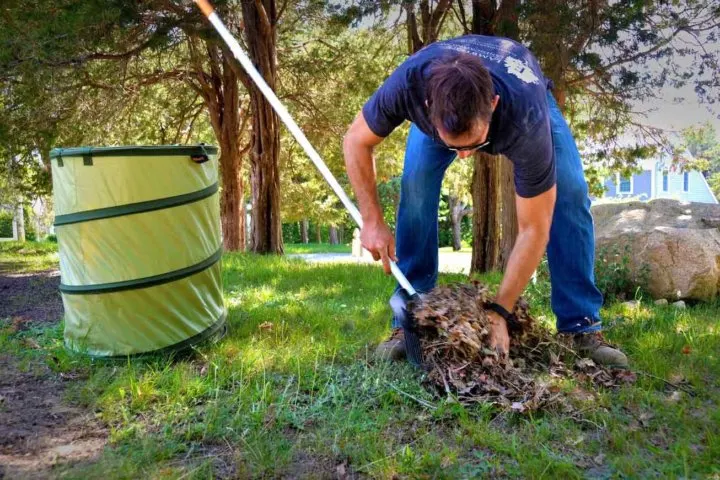
Start by sweeping away dirt, leaves, and twigs. Debris can trap moisture and cause stains or mold growth. A stiff broom or leaf blower works best. Clean corners and joints where weeds often sprout. Doing this once a week prevents buildup and keeps your space safe to walk on.
Step 2: Wash Surfaces Properly
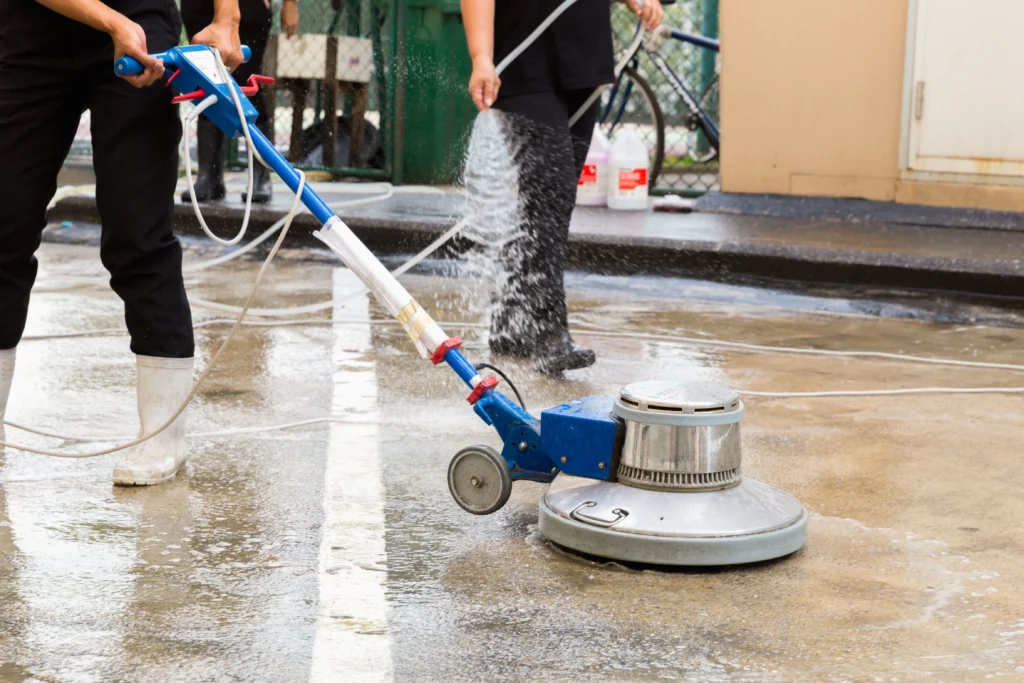
Next, wash your surfaces using the right water pressure. Use a pressure washer for sturdy materials like concrete and pavers. For softer stone or brick, stick with a gentle garden hose. Add mild soap if needed, but skip harsh chemicals. They can damage sealants or fade colors. Rinse until the water runs clear. This step helps keep your outdoor flooring bright and smooth without harm.
Step 3: Remove Weeds & Moss
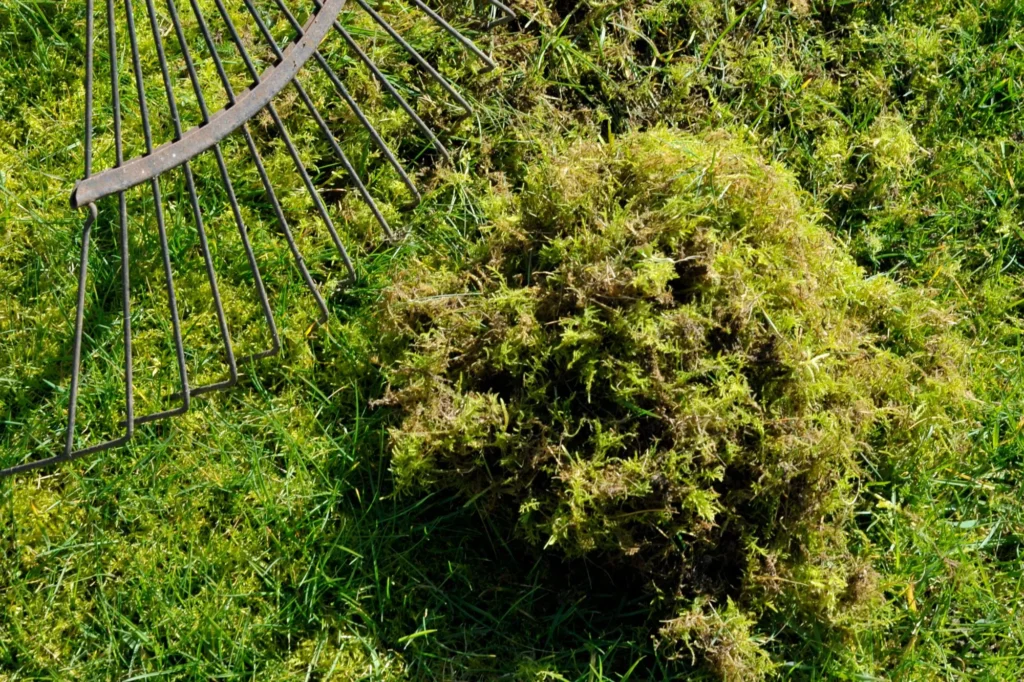
Weeds and moss make any patio or walkway look messy. Pull weeds by hand or use a natural weed killer made with vinegar or saltwater. Avoid bleach since it harms nearby plants. To stop regrowth, fill gaps with polymeric sand. It locks joints tight and prevents weeds from taking root again. With steady care, your space stays clean and tidy through every season.
Step 4: Treat Stains & Efflorescence
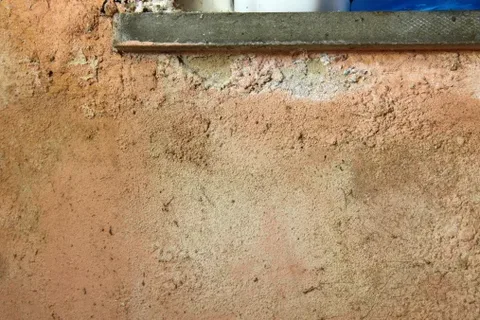
Oil drips, rust, and white salt marks are common on outdoor surfaces. Use a cleaner designed for pavers or mild soap and water for most stains. For oil, apply a little baking soda to absorb residue before washing. Efflorescence, the white salt film on surfaces, comes off with vinegar or a special cleaner made for stone and pavers
Always test any cleaner on a small area first to avoid damage. Following these steps keeps your hardscape looking fresh and safe. A simple cleaning routine protects surfaces from wear and makes every outdoor area ready for daily use.
Sealing for Long-Lasting Protection
Why and When to Seal Your Hardscape
Sealing keeps your patio, walkway, or driveway looking new for years. A good sealer protects against water, stains, and sunlight. It helps stop cracks and color fading while making cleaning easier. For anyone focused on sealing pavers and stone, it is one of the most important parts of maintenance.
Sealing adds a shield that blocks moisture and dirt from soaking in. It also prevents oil, grease, and rust from leaving marks. UV rays can dull the color of natural stone or pavers, but a sealed surface reflects light and keeps tones rich. Besides protection, sealers bring out the natural color and texture, giving your space a clean, finished look.
How often you seal depends on the material and climate. Most patios and driveways need sealing every two or three years. If water no longer beads on the surface, it’s time to reapply. Always clean the area first and let it dry fully before sealing. Avoid rushing the process, as trapped moisture can cause cloudiness.
There are two main types of sealers: penetrating and topical. Penetrating sealers soak into the surface and protect from within. They work well for natural stone and unglazed pavers. Topical sealers form a thin film on top, giving more shine and easy cleaning, but may wear faster in high-traffic areas. Choose the one that fits your needs best. With the right approach to sealing pavers and stone in your pressure washing house guide, you protect your investment and extend your hardscape’s life. A few hours of care now keep it strong and beautiful for years to come.
Seasonal Hardscape Maintenance Tips
Year-Round Care Made Easy
Caring for hardscape is easier when you follow the rhythm of the seasons. Each part of the year brings new challenges and small tasks that protect your outdoor space. By keeping up with regular care, your yard looks great and lasts much longer.
Spring
After winter, check for cracks or chips caused by freezing and thawing. Sweep away debris and rinse surfaces to remove leftover salt or dirt. Replace joint sand between pavers if needed. Spring is also the best time for deep cleaning and small repairs before plants and furniture return.
Summer
Hot weather brings more foot traffic and faster weed growth. Pull weeds early and refill joints with polymeric sand to block new ones. This is also the ideal time for sealing since warm temperatures help products dry evenly. Keep surfaces shaded when possible to reduce fading from sunlight.
Fall
Falling leaves and rain create stains and slippery spots. Sweep often and clear drains so water flows freely. Trim back plants that hang over paths. Use this time to inspect sealers and reseal if water no longer beads on the surface. Prepping now prevents bigger problems during winter.
Winter
Cold weather can be harsh on pavers and stone. Use sand instead of salt for traction, as salt damages surfaces and joints. Shovel snow with a plastic shovel to avoid scratches. Cover delicate areas if heavy snow or ice is expected. Following these seasonal steps helps you stay ahead of wear and tear. Regular attention keeps your hardscape strong, safe, and attractive throughout every month of the year.
Preventing Common Hardscape Problems
Stop Issues Before They Start
Taking care of small details helps your hardscape last longer and stay strong. Most big problems begin as small issues that are easy to prevent. A few smart habits can protect your patio, walkway, or driveway from damage and costly repairs.
Proper drainage is the first step. Standing water seeps into joints and cracks, causing erosion and stains. Make sure your hardscape slopes slightly away from your home or garden beds. Clear drains and gutters often so water flows freely during rain. You can also add small channels or gravel beds to guide water away from flat areas.
Joint sand plays a major role in stability. Over time, weather and foot traffic can loosen it, leaving gaps where weeds grow or stones shift. Refill joints with polymeric sand to lock everything tight. This keeps the surface even and prevents moisture from settling underneath.
Avoid harsh cleaning products or strong acids. These can weaken sealers and change the color of stone or brick. Stick with mild soap, water, or a pH-balanced cleaner. When sealing or washing, test a small section first to make sure it reacts well.
A little prevention goes a long way. Good drainage, strong joints, and gentle cleaning keep your hardscape safe from cracks and fading. With simple checks and quick fixes, you stop problems before they start and enjoy a clean, lasting outdoor space.
When to Call in the Pros
DIY vs Professional Maintenance
DIY pressure washing services can handle most routine cleaning tasks. Simple washing, sweeping, and sealing projects are easy with the right tools and a little care. They save money and help you stay involved in your home’s maintenance. Regular DIY work like this supports proper exterior upkeep and prevents small issues from turning into costly repairs.
However, some problems need a skilled hand. If you notice sinking pavers, uneven bricks, or major cracks in stone, it’s time to call professionals. They have the right tools and experience to reset surfaces and repair drainage issues. Large areas of fading or deep stains also benefit from expert treatment.
Professional hardscape teams can spot problems you might miss. They also apply long-lasting sealers and fix base layers that shift over time. Hiring help every few years keeps everything level and safe. DIY care is great for regular upkeep, but pros ensure your space stays solid and beautiful for the long run. Knowing when to call them keeps your patio or path strong and ready for every season.
Conclusion
Keep Your Outdoor Spaces Looking Their Best
Caring for your hardscape is simple when you make it a routine. Cleaning, sealing, and quick checks keep everything solid and beautiful. By tackling small tasks early, you stop bigger issues before they appear. Every sweep and rinse adds years to your patio, path, or driveway. Good care follows a simple pattern: clean, seal, prevent, and repeat. A few minutes each week keeps your outdoor space ready for daily use. It also protects your investment from weather and wear.
When you handle upkeep often, you save time and money later. The key is consistency. You don’t need heavy tools or harsh products, just steady effort and the right support. The reward is a clean, safe space that always looks inviting. With FC Paint Pro Wash, hardscape care becomes easy once it’s part of your normal routine. Start fresh today grab your broom or hose, or call our team for a quick professional wash. Small steps make a big difference over time.
Start with a simple clean today and enjoy your outdoor hardscape for years.
FAQs
Hardscape Maintenance Questions Answered
You should clean your patio pavers every one to two weeks, depending on use. Regular sweeping and light washing prevent stains and buildup. During rainy seasons or after parties, rinse them sooner. Small cleanups are the easiest way to learn how to maintain hardscape effectively.
Yes, sealing natural stone is important. It blocks water, oil, and dirt from soaking into the surface. Without sealing, stones lose their shine and color faster. Reapply sealer every two or three years, or when water stops beading on the surface. Sealing helps protect your investment and keeps your patio looking fresh.
Pull weeds by hand or use a natural vinegar solution. Avoid harsh chemicals that can damage nearby plants. After cleaning, fill gaps with polymeric sand to stop new growth. This simple step prevents weeds from returning and keeps joints tight for longer.
Pressure washing is safe when used correctly. Keep the setting low for brick and stone, and higher for concrete. Hold the nozzle a few feet away to avoid marks or surface damage. Gentle cleaning with steady water flow is one of the best ways to maintain your hardscape’s appearance.
Knowing how to maintain hardscape helps you prevent damage and save time later. Regular cleaning, sealing, and small repairs make your outdoor space look better and last longer.