
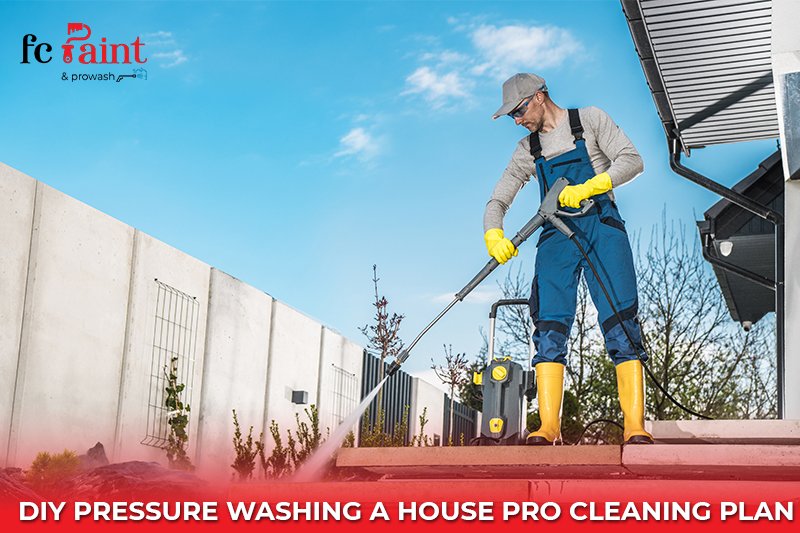
House exterior looking dull? Dirt, mildew, and stains piling up?
You are not alone. No. Not at all. Over time, every home exterior loses its charm. The good news? Pressure washing a house can bring back its sparkle fast. It’s the easiest DIY method to refresh siding and brick with stucco included. You don’t need a pro crew to get amazing results. This guide will walk you through everything. From tools to safety, we’ll help you clean like a pro.
Why Pressure Wash Your House Regularly?
One reason many homeowners love it? It works. Pressure washing removes years of grime in minutes.
It improves curb appeal fast. It even helps protect your home. Dirt buildup traps moisture. That moisture leads to mold and mildew. A quick wash clears it away. It also extends the life of your paint.
Another bonus? House power washing tips are easy to learn. It’s a low-cost method that can bring some great results. People love sharing the before-and-after pictures. You’ve probably seen them online. The glow-up is real.
Step-by-Step Guide to Pressure Washing a House
Here are the steps to pressure wash your house in the best way.
Check the Surface and Choose the Right PSI
Not every surface on your house is the same. Each material needs a different approach when pressure washing. Vinyl and aluminum siding do well with a PSI range between 1,300 and 1,600. Wood siding is more delicate, so it’s best to stay under 1,200 PSI to prevent damage.
Brick and masonry can handle a bit more force, usually between 1,500 and 2,000 PSI. However, using too much pressure can cause problems. It may strip paint, crack wood, or even loosen old bricks. Always match your pressure setting to the surface to avoid costly mistakes.
Prepare the Area (Cover Plants, Windows, Outlets)
Before you spray, walk around the house. Cover plants and flowers. Tape off outlets. Close windows tightly.
Move furniture out of the way. Remove fragile decorations. A few minutes of prep can save hours later.
Apply Detergent and Pre-Soak
Choose a detergent made for house exteriors. Apply it with a soap nozzle. Let it sit for about 10 minutes.
Pre-soaking loosens grime. It also kills mold and mildew. Don’t let the soap dry out before rinsing.
Start Washing: Use Top to Bottom Technique
Hold the nozzle at a 45-degree angle. Start at the top of the wall. Work your way down in overlapping strokes.
Keep the wand moving. Don’t hold it too close in one spot. This avoids damage.
Rinse and Inspect Results
Use clean water to rinse. A fan nozzle works well here. Start at the top again. Rinse downward.
Check corners and window edges. Re-spray any areas you missed. You want an even, clean look.
Common Mistakes and How to Avoid Them
Here are some key dos and don’ts of pressure washing a house:
- Don’t use a zero-degree nozzle. It’s too harsh.
- Don’t hold the wand too close. It can strip paint.
- Don’t skip detergent. Water alone won’t remove mold.
- Don’t spray windows or vents directly.
- Do a test on a small area first.
- Do wear goggles and gloves.
- Do shut off power to outdoor outlets.
Avoiding these common issues will give you better results. It also protects your home from costly damage.
Stunning House Washing Before and After Results
Pressure washing can transform a home. You’ll go from dull and stained to bright and fresh.
Some homeowners say it looks like a new paint job. Others are shocked by the color of their real siding.
House washing before and after results are often dramatic. They are also satisfying to watch or share.
How to Keep Your House Exterior Clean Longer
Want those results to last? Here are some quick tips:
- Trim trees and shrubs back.
- Clean gutters often.
- Use a water-repelling sealant on siding.
- Schedule a rinse every six months.
Taking a few extra steps after pressure washing your house can help keep it looking clean for much longer.
Pro Tips from Experienced Cleaners
Experienced cleaners know the secrets. Here are some insider tips:
- Wash on a cloudy day. Sun dries soap too fast.
- Use a 25-degree nozzle for most surfaces.
- Spray at a slight downward angle.
- Start from the shaded side of the house.
One big myth: Higher PSI isn’t always better. Too much pressure means more risk of damage.
It’s more about technique than raw power.
Another expert suggestion is to test your spray pattern on a hidden area first. Before you begin the full wash, pick a low or hidden corner of your siding or wall. Spray it for a few seconds to check the pressure and distance. This simple test helps avoid accidents like stripping paint or leaving streaks. It also lets you adjust your nozzle or PSI before moving on to more visible spots. Think of it as a dress rehearsal for your pressure washer.
Final Thoughts. Pressure Washing a House Made Simple
Pressure washing a house is easier than most people think. You can get pro-level results on your own.
Just follow the guide. Stay safe. Take your time. It can turn into a yearly habit. Your home will look better. It may even last longer.
FAQs
For vinyl siding, use 1,300 to 1,600 PSI. For wood, keep it under 1,200 PSI.
Once a year works for most homes. Twice a year, if you live in a humid area.
Yes. Too much pressure or a wrong nozzle can cause damage. Always test a small spot first.
Not every time. But it helps break down dirt and kill mold. Use it on very dirty areas.